
The evolution of modern professional basketball has reached a historic turning point where on-court production, media scrutiny, and systemic narratives collide in highly dramatic fashion. For a significant period, the upper echelons of the league were dominated by an established hierarchy that dictated not only who won championships but also who controlled the overarching cultural narratives surrounding the sport. However, that era of unchecked dominance faced a definitive, catastrophic reckoning on a spectacular evening in Las Vegas. The Indiana Fever did not merely secure a victory; they delivered a brutal, thirty-four point statement that thoroughly dismantled the reigning champion Las Vegas Aces in a 109-75 blowout, sending massive shockwaves through the entire sporting landscape.
This monumental shellacking was far more than an ordinary mid-season blowout. It served as a highly visible, undeniable counter-narrative to months of underlying friction, public grievances, and controversial commentary regarding the role of identity, marketability, and race within professional sports. At the very center of this cultural and physical clash was Las Vegas superstar and multi-time league MVP A’ja Wilson, whose previous public statements regarding the unwritten rules of targeting specific players based on racial demographics had already polarized the basketball community. To many observers, the sheer decisiveness of the Fever’s victory felt like a direct athletic response to those divisive narratives, proving that competitive excellence remains the ultimate equalizer on the hardwood.
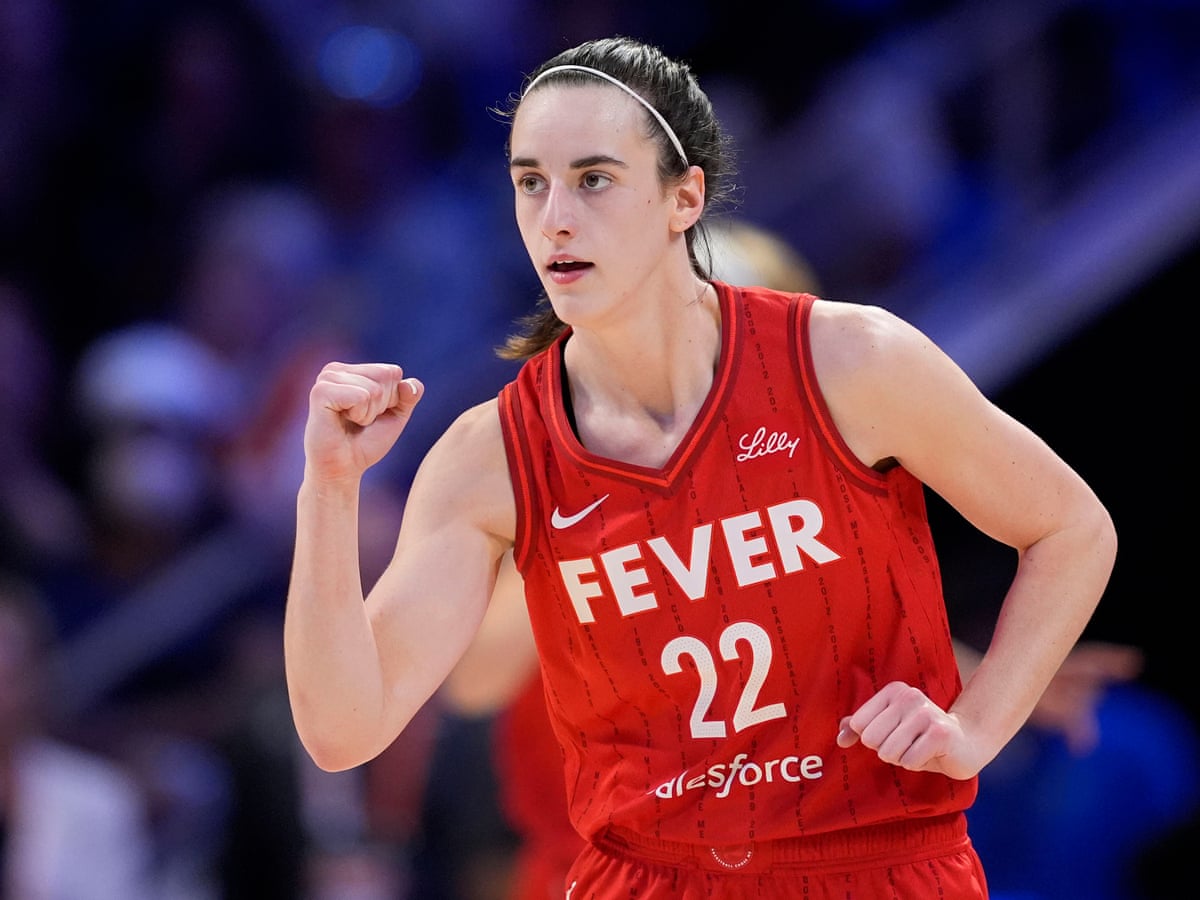
The primary architect of this historic triumph was the highly anticipated return of Indiana’s generational rookie icon, Caitlin Clark. Operating under a strict, highly scrutinized minutes restriction imposed by head coach Stephanie White, Clark nevertheless managed to orchestrate an offensive masterclass that completely destabilized the Aces’ defensive schemes. In just twenty-four minutes of action, Clark compiled a versatile stat line of twelve points, seven rebounds, and six assists. More importantly, this limited performance allowed her to solidify her place in the history books as the fastest player in WNBA history to achieve 600 career assists, reaching the milestone in a mere 72 games.
Clark’s performance was characterized by an effortless command of the floor, showcasing a lethal array of ball-handling maneuvers and perimeter tracking. Early in the contest, she established her dominance by executing a spectacular crossover and step-back three-pointer directly over Wilson, signaling to the reigning MVP that the perimeter would offer no safety. Clark continuously pushed the pace in transition, blowing past veteran guards like Chelsea Gray, who appeared completely overwhelmed by the rookie’s sheer speed and physical resilience. Despite absorbing immense physical contact in the paint that went completely unnoticed by the officiating crew, Clark remained unflappable, distributing precise drop passes to her interior targets and proving that her impact cannot be contained by artificial minutes restrictions.
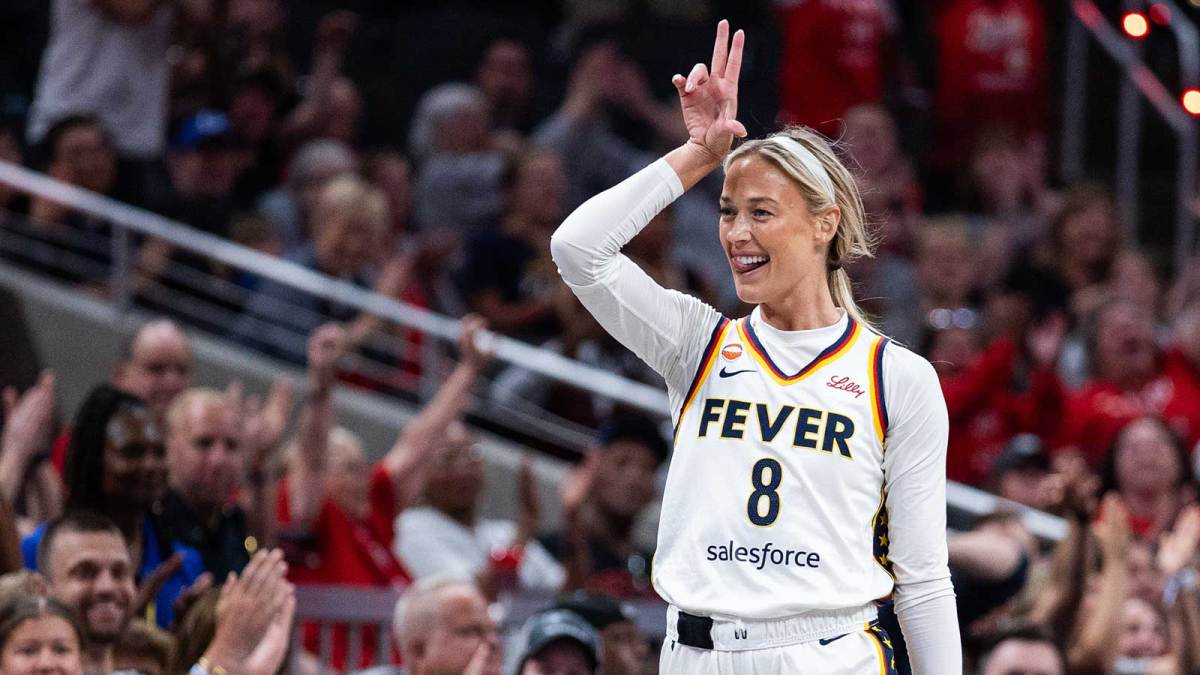
While Clark set the historic pace, the night transformed into an absolute celebration of perimeter efficiency courtesy of Sophie Cunningham. Cunningham, who has rapidly evolved into a massive mainstream pop-culture phenomenon following a viral appearance as an honorary ring card girl at a major combat sports event, brought that exact same electric energy onto the basketball court. Having fully embraced the vibrant festivities of Las Vegas, including high-profile appearances and cageside interactions with prominent media figures, Cunningham demonstrated that the brightest spotlights only serve to elevate her athletic production.
Coming off the bench, Cunningham unleashed a merciless shooting firestorm that completely broke the spirit of the Aces’ defensive rotation. She turned in a near-flawless offensive display, converting seven of her nine field-goal attempts, including a blistering six-for-seven performance from beyond the three-point arc to finish with twenty points. Her movement off the ball was a clinic in spatial awareness, consistently exploiting the defensive tendencies of Las Vegas defenders who repeatedly sagged off her in the perimeter. Cunningham’s red-hot shooting stretch extended the Fever’s lead to insurmountable margins, earning her a staggering plus-thirty point differential and cementing her status as the absolute premier perimeter weapon coming off the bench in professional basketball.
The perimeter onslaught was perfectly complemented by a dominant, physical interior performance from center Aaliyah Boston. In a highly anticipated individual matchup that many analysts believed would dictate the outcome of the game, Boston completely outclassed and out-muscled Wilson in the paint. Boston turned in a stellar double-double, racking up nineteen points, eleven rebounds, and four assists on a remarkably efficient nine-of-fourteen shooting performance. Defensively, Boston anchored the paint with absolute authority, utilizing her frame and lateral quickness to force Wilson into highly contested, uncomfortable looks throughout the entire evening.
The physical reality of this matchup completely exposed the limitations of the reigning MVP when stripped of systemic advantages. Wilson finished the evening with twenty points and twelve rebounds, a stat line that appears respectable on the surface but hides an incredibly inefficient and frustrating performance. Boston’s suffocating defense forced Wilson into a dismal nine-of-twenty-three shooting night from the floor. Furthermore, the true narrative of the matchup was revealed at the charity stripe. Wilson, who historically relies heavily on drawing whistles to sustain her scoring volume, was limited to a mere two free-throw attempts during the entire contest.
This statistical anomaly highlighted a broader truth that many critics have long maintained: when the officiating crew allows a highly physical, balanced contest without consistently bailing out established superstars with whistle support, their efficiency plummets to ordinary levels. Without the luxury of double-digit free-throw opportunities, Wilson appeared visibly frustrated, lacking the tactical answers to overcome Boston’s disciplined, legal verticality in the paint. The sheer physical dominance displayed by Indiana’s frontcourt completely dismantled the aura of invincibility that had previously surrounded the Las Vegas interior defense.
The lopsided nature of the destruction also raised critical questions regarding the current state of the Las Vegas backcourt rotation. Chelsea Gray, once revered as the foundational point guard of the championship roster, looked uncharacteristically slow and defensively vulnerable, struggling immensely to mirror the rapid lateral movements of Indiana’s younger guards. The lack of perimeter containment forced the Aces’ interior help defense to rotate early, leaving the perimeter completely exposed for Cunningham and guard Kelsey Mitchell, who exploded for twenty-seven points, including a dominant twenty-point first half that put the game entirely out of reach before the halftime intermission.
Beyond the tactical adjustments and statistical milestones, the atmosphere inside the arena underscored a profound cultural shift occurring within the sport. Despite playing in the home arena of the back-to-back champions, the building was completely dominated by an absolute sea of Indiana jerseys and passionate fans who traveled from across the country to witness the spectacle. The overwhelming crowd support effectively transformed the venue into a home environment for Clark and the Fever, demonstrating an unprecedented level of commercial draw that has permanently shifted the economic landscape of the league.
As the final buzzer sounded on the historic thirty-four point destruction, the overarching narrative of the professional basketball landscape was permanently altered. The victory proved that the Indiana Fever possess a terrifyingly potent combination of historic rookie playmaking, elite perimeter shooting, and interior physical dominance capable of destroying any team in the league. For the Las Vegas Aces, the defeat serves as a stark warning that past achievements and public grievances offer zero protection against a hungry, unified opponent determined to claim greatness on the court.


