
🚨 TV Showdown Explodes: Susanna Reid Defends Rylan Clark in Fierce Immigration Debate on Good Morning Britain
In the early hours of Tuesday morning, as the sun barely broke through London’s overcast skies, Good Morning Britain transformed from a routine news broadcast into a battleground for Britain’s most polarizing debate yet: immigration, myth, and media responsibility. On screen, Susanna Reid, the program’s seasoned host, found herself in the eye of a storm—not for her own statements, but for defending her co-star, former X Factor contestant Rylan Clark, who had been under fire since his controversial comments last week on This Morning alongside Josie Gibson.
The UK woke up to headlines accusing Rylan of “regurgitating myths and lies” regarding the country’s immigration policies, a claim primarily championed by veteran political commentator Kevin Maguire, who appeared on the show alongside Andrew Pierce. Yet, in the hours that followed, the narrative shifted in ways no one anticipated.
From Backlash to Broadcast Battle
Rylan Clark’s initial remarks had ignited an intense backlash across social media and political circles. While some praised his honesty, many accused him of spreading misinformation. In response, Rylan issued a public statement urging his followers to “stop putting people in boxes” and instead engage in meaningful conversations about the crisis.
However, that statement was not enough to quiet critics. On Tuesday’s GMB, Maguire did not hold back:
“All these terrible myths that Rylan Clark regurgitated, spouted most of them,” he said, his tone sharp, his criticism unwavering.
It was a declaration designed to corner the former reality TV star. Many viewers expected Rylan to remain silent, overwhelmed by the avalanche of accusations. But instead, a surprising turn of events occurred: Susanna Reid, known for her measured journalistic style, leapt to his defense with the intensity of a seasoned warrior.
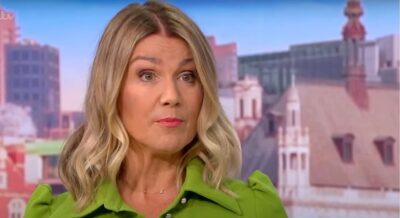
Susanna Steps Into the Fray
“Hang on,” she began, her voice calm but firm. “He pointed out that this country is built on immigration, and he was grateful to all of the migrants who have come to the NHS for helping support his mum.”
The studio went momentarily silent. Reid’s defense was not only passionate—it was meticulously framed, acknowledging Rylan’s concerns while refuting the claim that his comments were anti-migrant.
“He was actually concerned, though, that we’ve got a sort of welcome to the UK, and we don’t know who all of these people are. I have to say, Kevin, it is the duty of government, as the government itself would acknowledge, that we control borders and we do not just welcome everybody if we don’t know who they are. And I think Rylan’s message struck a chord with a lot of people… He did not want it to be an anti-migration message.”
Her rebuttal was clear, incisive, and unrelenting—a precise dismantling of Maguire’s claims, all while maintaining a firm yet composed presence.
The Political Debate Ignites Social Media
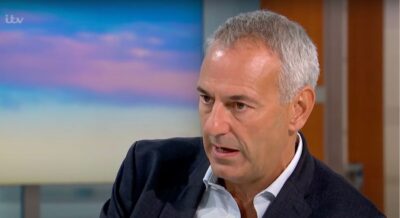
Kevin Maguire attempted to push back, doubling down: “He also regurgitated a load of myths and lies. Let’s not ignore that… Myths and lies have gone mainstream, and we’ve got to challenge that, we’ve got to push back on that.”
But Reid, far from backing down, pressed forward with pointed clarity:
“Rylan also pointed out that we also have a homelessness problem, the government itself acknowledges that there’s not enough housing. So, I just think that to say that what Rylan said was outrageous, regurgitating propaganda [was wrong].”
Her words reverberated not just through the ITV studio but across Twitter, X, and countless online forums. Hashtags like #RespectSusanna and #FreeRylan began trending, illustrating a divide between viewers who lauded Reid’s courage and those who criticized her stance.
Praise From Fans
Reactions were swift. Users praised Reid for her principled stance:
“@susannareid100 deserves a knighthood for the way she just annihilated the vile, delusional Kevin Maguire for totally misquoting @Rylan Slayed!” one user wrote.
“Respect to her,” another commented. “For once I agree with her,” a third remarked.
“She’s stating the obvious tho and 100% correct,” a fourth insisted.
Social media amplified the drama, turning a studio debate into a nationwide conversation about fairness, media responsibility, and the line between fact and opinion.
Backlash and Criticism
Not all reactions were favorable. Some viewers attacked Reid for siding with Rylan, claiming her defense crossed ethical boundaries:
“What a horrible woman,” one viewer expressed. “So disappointing from her this morning.”
“It is time for her to go. Can’t stand her views,” another wrote.
“Susanna Reid is clearly as ignorant and no better than Rylan Clark,” a fourth commenter added.
The criticism reflected the broader societal tensions surrounding immigration, freedom of speech, and the role of media personalities in shaping public opinion.
The Stakes Are Higher Than Morning TV
What made the debate particularly riveting was the fusion of celebrity influence, journalistic credibility, and national policy. Rylan Clark is not merely a television host—he is a cultural figure whose statements reach millions. Reid’s defense of him highlighted the delicate balance media personalities must strike: being true to personal beliefs while navigating the intense scrutiny of public and political reaction.
Moreover, the discussion underscored a persistent challenge in modern media: distinguishing between legitimate commentary and misinformation. While Maguire’s criticisms focused on perceived inaccuracies in Rylan’s statements, Reid’s defense emphasized context, intent, and the nuance often lost in headline-driven discourse.
The Human Element
Beyond the political and media spectacle, the debate resonated on a human level. Rylan’s references to his mother and gratitude toward NHS workers personalized the abstract policy discussion. Reid’s acknowledgment of this human dimension added emotional weight to her arguments, turning what could have been a sterile policy debate into a narrative about real lives affected by government decisions.
Her intervention reminded viewers that behind every policy conversation are individuals with experiences, families, and personal stakes—a factor often overlooked in polarizing debates.
Media Analysts Weigh In
Television analysts quickly noted the significance of Reid’s actions. “This is a rare moment where a host takes a clear stance in defense of a colleague under scrutiny,” said Dr. Harriet Kline, media studies professor at the University of London. “It reflects both the power of live broadcast and the importance of context in shaping public opinion. Reid did not merely defend Rylan—she reframed the discussion to emphasize fairness, compassion, and nuance.”
Industry insiders also noted that the debate could have implications beyond ITV’s morning programming. With public trust in media fluctuating, the way personalities navigate controversial topics can impact both ratings and the broader credibility of news networks.
A Lesson in Media Responsibility
Susanna Reid’s defense of Rylan Clark illustrates a key lesson: journalistic integrity does not necessarily mean neutrality in the face of mischaracterization. Sometimes, defending a colleague’s intentions, providing context, and amplifying overlooked nuances is a critical part of responsible broadcasting.
Reid’s performance on Tuesday morning exemplified the delicate role media figures play as both commentators and guardians of public dialogue. By contextualizing Rylan’s remarks, she reminded audiences that debates about immigration, policy, and national identity are multi-layered and demand careful discussion rather than reactionary judgment.
Public Reaction and Long-Term Impact
In the days following the broadcast, discussions continued online, with debate threads, opinion columns, and social media posts dissecting Reid’s intervention. Some praised her courage; others condemned her position. What remained clear, however, was the impact of her actions: she turned a potentially career-threatening controversy into a teachable moment about nuance, empathy, and accountability.
Observers also highlighted the generational divide reflected in audience responses. Older viewers tended to favor Reid’s principled defense, valuing her attention to context and human experience, while younger audiences often reacted more viscerally to perceived political correctness or bias. The conversation illuminated broader societal tensions, emphasizing the ongoing challenge of discussing immigration and policy in a highly polarized environment.
The Drama Continues
As the debate over Rylan Clark’s comments and Susanna Reid’s defense continues, one fact is undeniable: Good Morning Britain succeeded in capturing national attention, sparking conversations far beyond the studio walls. The incident demonstrates the enduring power of live television, where a single exchange can resonate across social media, news cycles, and public discourse.
For Reid, the morning’s confrontation reinforced her reputation as a fearless broadcaster unafraid to defend colleagues and challenge critics. For Rylan, it reaffirmed the importance of context and personal narrative in public commentary. For viewers, it was a reminder that behind every soundbite lies a complex story deserving careful consideration.
Conclusion: A Moment of Cultural Reflection
What began as a routine discussion about UK immigration policies transformed into a nationwide spectacle, highlighting issues of media responsibility, fairness, and the human dimension behind public debates. Susanna Reid’s defense of Rylan Clark underscored the vital role of journalists in framing discussions thoughtfully, even under intense scrutiny.
In an era where public figures are swiftly judged and vilified, her stance exemplified courage, clarity, and integrity. It is a moment that will be remembered not for the controversy alone, but for the demonstration of principled leadership in the media—an example of how thoughtful defense and context can rise above noise and headlines.
Good Morning Britain, that Tuesday morning, was more than a program—it was a case study in the power of voice, empathy, and accountability in contemporary broadcasting.


